Bookmark and Share     Utne Blogs > Arts

Infectiously Provincial: Drawing New York City, and a Zine About Brooklyn

Esopus 11 CoverNew Yorkers are notoriously provincial, or so the stereotype goes. Here are two charming projects that attempt to explain the devotion:

Jason Polan asked people to name their favorite thing about New York, then did his best to draw each one. Esopus published the results of the collaboration in its latest issue. The sketches capture the city’s quiet, day-to-day movements, celebrating the humble things—from pigeons to a row of discarded chewing gum—that make New York a great place to live. 

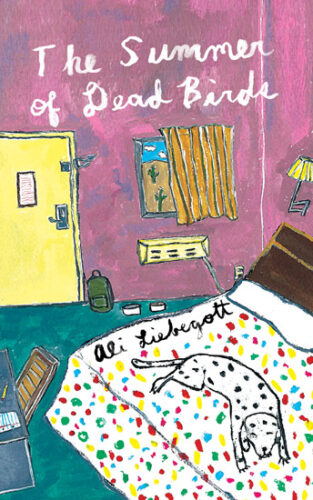
brooklyn! cover

Fred Argoff publishes a zine called Brooklyn! (not available online). Argoff posesses an encyclopedic knowledge of his favorite borough, and his zine proffers seemingly endless reasons to love it. Recent issues have featured guides to Brooklyn slang, the history of a famous local rollercoaster, and a great collection of aerial photos.

You don’t have to like New York—or even know it—to enjoy the drawings or the zine. The hometown love is infectious. It’ll leave you composing local paeans of your own.

Source: Esopus, Brooklyn! (for more info, write Fred Argoff at Penthouse L, 1170 Ocean Pkwy., Brooklyn, NY 11230-4060)


Classic Graphic Design

vintage TWA posterDavid Klein was an illustrator and art director best known for his Broadway window cards and TWA travel advertisements in the 1950s and '60s. His work has been adopted into the permanent collection of the Museum of Modern Art in New York, and a recent Klein Estate auction at Tepper Galleries yielded tremendous results: More than 90 percent of the 300 works brought to the block were sold.

His website allows you the opportunity to browse his collections of vibrant posters, window cards, and illustrations that fit perfectly into the current popularity of retro images. For those who contend that graphic design isn’t art (a hot debate in recent years), they need only look at his playful work to see evidence to the contrary.

To see more classic graphic design, check out Utne Reader's story on WPA posters.

Image courtesy of the Estate of David Klein.

Hasidic Jews and Hipster Hate

Hipster BikerThe large Hasidic Jewish population of Williamsburg, Brooklyn, has been clashing with hipsters since an onslaught of 20-somethings began invading their neighborhood in the ’90s. Today the two groups are fighting it out over bike lanes. At a community board meeting on September 8, the New York Post reports that Hasidic representatives proposed the elimination of bike lanes on the grounds that the lanes cause traffic problems and congestion. One Hasidic representative, Simon Weisser, admitted to the Post that the hipsters’ scantily clad attire was also a major problem. “It bothers me,” said Weisser, “and it bothers a lot of people.”

The bike lanes are the latest front in the hipster vs. Hasidic cultural clash over fashion, modesty, and neighborhood identity. New York Magazine points to an article from the Brooklyn Paper about a fight over a billboard for the remade TV show 90210 that was deemed distasteful because it featured people in swimsuits. Back in 2004, Harper’s magazine printed a more spiritual salvo in the fight against the hipsters, when Hasidic Jews distributed a prayer called, “For the Protection of Our City Williamsburg From the Plague of Artists.” The prayer read in part:

Please, our Father God of Mercy, have mercy upon our generation that is weak, and remove this difficult test from these people, these immoral antagonists that by their doing will multiply, God forbid, the excruciating tests and the sight of the impurity and immorality that is growing in the world.

(Thanks, Jewlicious.)

Image by Sookie, licensened under Creative Commons


Hipster Rap: The Latest Hater Battleground

spankrockEvery aesthetic movement has its rivalries, its schisms, its heated battles over who’s keeping it real and who’s already sold out. Hip-hop is, famously, no exception: East Coast vs. West Coast, Tupac vs. Biggie, old school vs. new school—we’re all too familiar with these contentions. But now some of the old-school contingent are hating on a new segment of their new-school progeny: hipster rappers (hipster-hop?).

Hipster rap, as loosely defined by the Chicago Reader, consists of the most recent crop of MCs and DJs who flout conventional hip-hop fashions, eschewing baggy clothes and gold chains for tight jeans, big sunglasses, the occasional keffiyeh, and other trappings of the hipster lifestyle. Mainstream rappers like Kanye West and Lupe Fiasco, along with smaller up-and-coming acts like Kid Sister and the Cool Kids, come under fire from the old-school hip-hop website Unkut, and Jersey City rapper Mazzi has recorded diss tracks criticizing, by name, the rappers he sees as poseurs.

The Reader argues that such criticisms don’t hold much water in a genre that has always reinvented itself, borrowing and remixing until the question of authenticity is at best a slippery one. It’s also superficial: much of the derision directed toward hipster rap barely extends beyond clothes and other accoutrements, while the actual substance of the music never really enters the discussion. Furthermore, hip-hop’s notorious homophobia still lingers; much of the backlash takes the form of overt gay panic as rappers call each other fags for copping the metrosexual appearances of hipster fashion.

Race also complicates matters: the latest crop of hipster rap—or new rap, or independent hip-hop, or whatever we’re calling it—is just as likely to be heard at a party full of white kids slamming back Sparks on the Lower East Side as it is in the black community. The Reader notes, however, that the listener base is increasingly diverse, citing multiple firsthand accounts of shows and parties around Chicago where the audience defies racial and socioeconomic categorization—a compelling rebuttal to those still hung up on racial, social, or artistic distinctions.

Image by  Nev Brown , licensed by  Creative Commons . 


Inflatable Street Art by Joshua Allen Harris

Joshua Allen Harris Street ArtIt’s difficult to capture the attention of a New Yorker. Artist Joshua Allen Harris has found a way, not only to make people stop and look, but also laugh out loud, and that’s good for everybody. His adorable inflatable creatures harness the power of the burst of air that accompanies a subway car’s passing, creating a wonderful, herky-jerky effect that gives the creatures their personalities. Best of all, in their deflated state, they look exactly like trash caught in the grates. As is often the case, things are more than they seem.

(Thanks, Wooster Collective.)

Stephanie Glaros

Here are two videos of Joshua Allen Harris’ work:


An Artist Drops Out

The 1960s smashed the cliché of the isolated and introverted artist. Drugs, experimentation, and the search for freedom led troves of hippy artists out of urban scenes and into rural art communes. Artist Michael Fallon’s blog The Chronicle of Artistic Failure in America tells the story of one such artist, Dean Fleming. After playing a pivotal role in sparking Manhattan’s SoHo art scene, the painter turned his back on New York to make a life for himself in Colorado. Fleming found inspiration in the area’s Native American culture and mountainous scenery on a visit to Drop City, the United States’ first rural hippy commune. The unsustainable chaos he observed there led him to found a commune of his own, the Libre Community, in 1968. Fleming hoped Libre would allow artists of all kinds to escape the city and recharge. It must have worked, because the commune still exists today.

(Thanks, GalleryDriver.)

Erik Helin


Pay Now & Save $6!
First Name: *
Last Name: *
Address: *
City: *
State/Province: *
Zip/Postal Code:*
Country:
Email:*
(* indicates a required item)
Canadian subs: 1 year, (includes postage & GST). Foreign subs: 1 year, . U.S. funds.
Canadian Subscribers - Click Here
Non US and Canadian Subscribers - Click Here
Want to gain a fresh perspective? Read stories that matter? Feel optimistic about the future? It's all here! Utne Reader offers provocative writing from diverse perspectives, insightful analysis of art and media, down-to-earth news and in-depth coverage of eye-opening issues that affect your life.

Save Even More Money By Paying NOW!

Pay now with a credit card and take advantage of our Earth-Friendly automatic renewal savings plan. You save an additional $6 and get 6 issues of Utne Reader for only $29.95 (USA only).

Or Bill Me Later and pay just $36 for 6 issues of Utne Reader!